
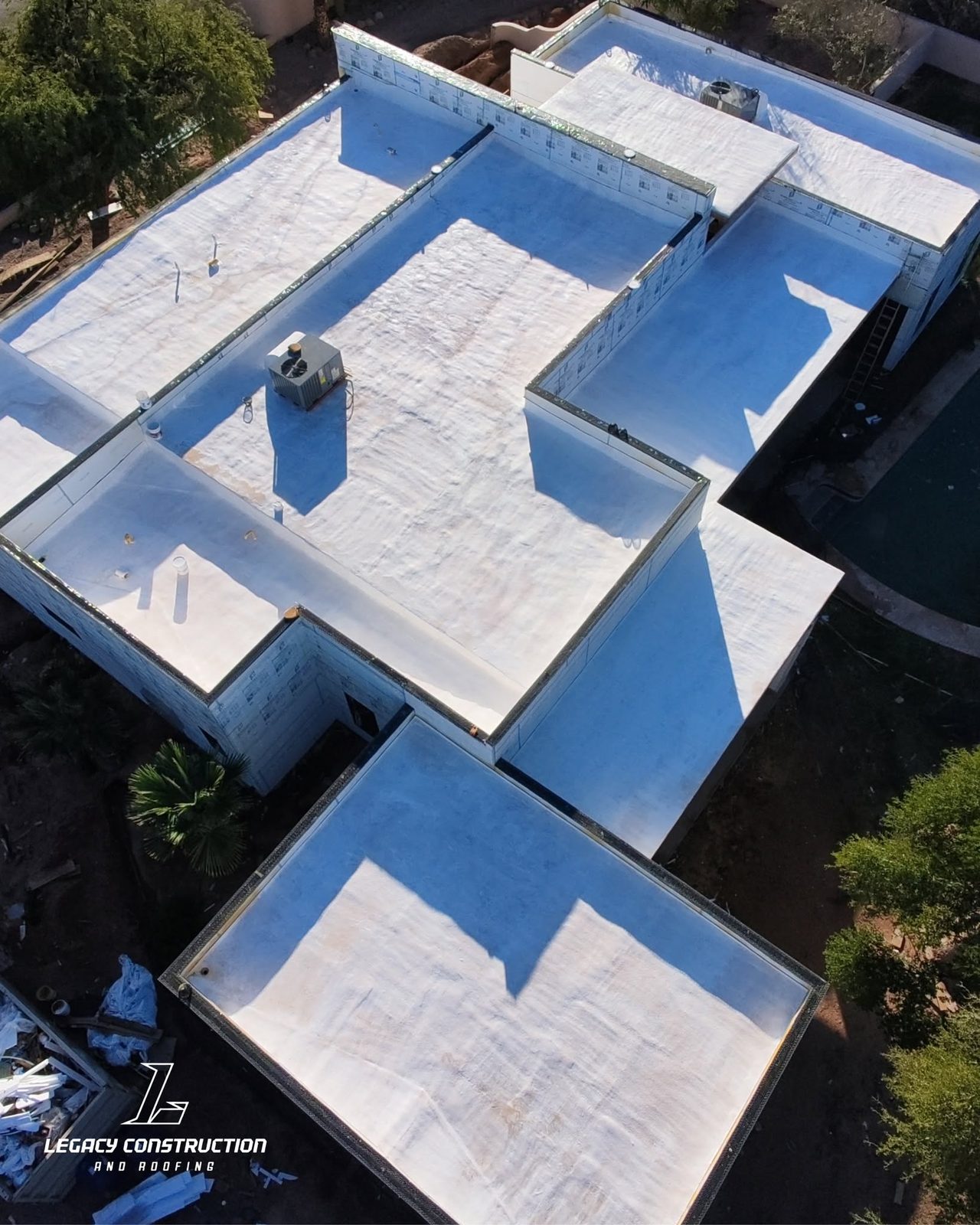
Foam Roof Coating & Repair
Sprayed polyurethane foam covers a huge share of flat and low-slope roofs in the Valley, and it's the one roof system that genuinely rewards maintenance. The foam itself can last decades — but only while the coating over it holds. Let the coating go and the sun eats the foam underneath, and a recoat turns into a replacement.
Foam Roof Coating & Repair Services
Recoat Beats Replace
A roof caught before the foam is damaged gets recoated. One that isn't needs new foam — a different job at a different price.
Seamless By Design
Foam is sprayed as one continuous surface with no seams, which is why it suits parapets, penetrations and odd rooflines.
Cooler Inside
Foam insulates and the reflective topcoat sends sunlight back, which is the point on a flat roof in July.
Foam Roof Coating & Repair Across Maricopa County
Roof Repair & Replacement
Plenty of Valley homes are part flat, part pitched. We handle the whole roof — foam, tile and shingle — on one estimate rather than splitting it between trades.
Recoat, Repair Or Replace
Three different jobs get called "foam roof work," and they cost very different amounts. The inspection decides which one you actually need.
- 1Step 1
Inspection
We check coating thickness and wear, probe for soft or saturated foam, and look at drains, scuppers and parapet flashing. Wet foam has to come out; dry foam under a worn coating just needs covering.
- 2Step 2
Prep & Repair
The roof is cleaned, blisters and pinholes are cut out and patched, damaged foam is removed and replaced, and low spots that hold water get built up before anything is coated.
- 3Step 3
Coating
Elastomeric coating goes on to the manufacturer's specified thickness, usually with granules embedded for walkability and UV protection. Thickness is what buys years, so the spec belongs on your estimate.
- 4Step 4
Documentation
You get photos of the prep and the finished surface, and a record of the coating and mil thickness used, so the next recoat can be scheduled instead of discovered.
Foam Roof Coating & Repair FAQs
How often does a foam roof need to be recoated?
Manufacturers generally expect a recoat somewhere around the five-year mark, and the number depends on the coating used, the thickness applied, and how much sun and foot traffic the roof takes. A roof that gets recoated on schedule can keep going for decades on its original foam.
What happens if I skip the recoat?
The coating is the sunscreen. Once it wears through, UV starts breaking down the foam itself, and damaged foam has to be cut out and replaced rather than simply covered. That's the difference between a maintenance job and a roofing job.
Can a foam roof be repaired, or does it all have to come off?
Most foam roofs are repairable. Blisters, pinholes and storm punctures get cut out and patched, and saturated sections get replaced. Full replacement is for roofs where the foam is broadly wet or deteriorated.
Why does water sit on my flat roof after a storm?
Ponding usually means the roof lost its slope to drains or scuppers, or that a drain is blocked. Water standing for days accelerates coating failure, so the fix is to correct the drainage or build up the low area, not just coat over it.
Does a foam roof lower cooling bills?
Foam adds insulation the roof deck didn't have, and the reflective topcoat sends a large share of sunlight back rather than into the house. How much you notice depends on your attic, ductwork and existing insulation.
Can foam be installed over my existing flat roof?
Often, yes — foam is frequently sprayed over sound existing roofing, which avoids a full tear-off. Whether yours qualifies depends on what's under there and how much moisture it holds. That's what the inspection is for.
How much does a foam roof recoat cost?
It depends on square footage, how much prep and repair the surface needs first, and the coating and thickness specified. Recoating is far less than replacing foam, which is exactly why the timing matters.
What drives roof cost in Phoenix